Short answer: to find the right moisturizer, match three things in this order: your skin type (how your face feels a few hours after washing), the texture that suits it (gel or lotion for oily skin, cream for normal to dry, a balm or richer cream for very dry patches), and a short, fragrance-free ingredient list if your skin is easily bothered. Then test one new product at a time for a couple of weeks before you judge it. If you'd rather skip the guesswork, our free 10-second Skin Scan suggests a starting cream for you.
Most people pick a moisturizer by brand, price or a friend's recommendation and then wonder why it feels greasy or disappears by lunch. Below is a simple four-step way to choose one that actually fits your skin, plus what to look for on the label and how to tell if it's working.
Step 1: Figure out your skin type
Your skin type decides almost everything else. The easiest at-home check is the bare-face test: wash with a gentle cleanser, pat dry, apply nothing, and notice how your skin feels after about an hour.
| How your face feels | Likely type | What it usually wants |
|---|---|---|
| Tight, rough or flaky in spots | Dry | A richer cream or balm |
| Shiny all over, especially by midday | Oily | A light gel or lotion, small amounts |
| Shiny T-zone, normal or dry cheeks | Combination | A light cream, with extra on dry areas |
| Comfortable, not tight or shiny | Normal | A light to medium cream |
| Stings, itches or turns pink with new products | Sensitive (can overlap any type) | Fragrance-free, few ingredients |
Skin type isn't fixed. Many people are combination in summer and dry in winter, so it's normal to own a lighter and a richer moisturizer. For two more ways to check, see our guide What's My Skin Type? 3 Easy At-Home Tests.
Step 2: Choose the texture that suits your skin
Texture is the part most people get wrong, and it mostly comes down to how much water versus oil is in the formula. Vanicream's skin basics guide explains it simply: lotions have the most water and are the thinnest, creams are roughly half water and half oil, and ointments are mostly oil and the heaviest. The American Academy of Dermatology (AAD) makes the same point from the dry-skin side: creams and ointments are more moisturizing than lotions, so people with dry skin may do better skipping lotions altogether.
| Texture | Feel | Best for |
|---|---|---|
| Gel | Lightest, watery, sinks in fast | Oily skin, humid weather |
| Lotion | Thin, easy to spread | Oily or normal skin, summer |
| Cream | Medium to rich, cushiony | Normal, combination and dry skin |
| Balm or ointment | Rich, little or no water | Very dry patches, cold weather, overnight |
A quick note on tallow creams
Tallow skincare spans this whole range. A tallow balm is water-free and rich, while a whipped tallow cream feels lighter and airier. If you're curious how tallow compares with a classic water-based lotion, read Tallow vs Lotion: Which Is Better for Dry Skin (and When Lotion Wins).
Step 3: Read the label for what matters
You don't need to decode every ingredient. Focus on a few things:
- Fragrance. The AAD advises people with dry skin to avoid fragranced products, which can be irritating. If your skin is easily bothered, choose "fragrance-free" rather than "unscented," which can still contain masking scents. Our post Why Use Fragrance-Free Skincare? explains the difference.
- Length of the list. Fewer ingredients means fewer things that could disagree with you, and it's easier to figure out what's working.
- Moisturizing ingredients that fit your type. For dry skin, the AAD mentions ingredients such as ceramides and hyaluronic acid. Rich fats and butters (like shea butter or tallow) help soften skin and hold moisture in, so they suit dry and normal skin best.
- "Non-comedogenic." If your skin is oily or breakout-prone, the AAD suggests looking for this label, and starting with a light gel or even less moisturizer.
- Daytime protection. A moisturizer isn't a sunscreen unless it's labeled with SPF. Use a separate sunscreen in the morning.
Step 4: Test it the right way
Even the right type of moisturizer can be the wrong product for you. Give a new one a fair trial:
- Patch test first. Apply a small amount to your inner arm or along your jaw once a day for a few days. If your skin stays calm, move to your whole face.
- Change one thing at a time. If you swap your cleanser, serum and moisturizer in the same week, you won't know which one made the difference.
- Use the right amount. A pea-sized amount covers most faces. More isn't better; too much is the most common reason a cream feels greasy.
- Apply to slightly damp skin. The AAD recommends moisturizing right after bathing to help lock in water.
- Give it two weeks. Judge comfort by how your skin feels by midday and the next morning, not in the first five minutes.
Signs it's the right moisturizer
- Your skin feels comfortable, not tight, a few hours later.
- It sits well under makeup or sunscreen without pilling.
- You aren't reaching for more by lunchtime.
Signs to switch
- It still feels greasy after 10 minutes: try a lighter texture or use less.
- Your skin feels tight again within an hour or two: go richer.
- Stinging, itching or redness: stop using it. If irritation doesn't settle, check in with a dermatologist.
Common mistakes when choosing a moisturizer
- Buying for the label, not the texture. "Hydrating" on a light gel won't feel like enough for very dry skin in January.
- Skipping moisturizer because skin is oily. Many oily-skin types still feel better with a small amount of a light formula.
- Using one product all year. Cold air and indoor heat change what your skin wants. Our winter skincare routine for dry skin walks through the seasonal switch.
- Judging too fast. Most people decide in a day. Give it two weeks.
Let the Skin Scan narrow it down
If you'd like a starting point instead of reading labels, try our free Skin Scan. You look into your phone or laptop camera for about 10 seconds and it reads how your skin looks in the light (radiance, evenness, shine and calm), then suggests one of our face creams. It's a cosmetic guide, not a medical or diagnostic tool, so treat the result as a friendly suggestion. For the best read, face a window with no makeup on. Here's how the Skin Scan works.
Which Mom's Tallow cream fits which skin
We make our creams in small batches in New Jersey with grass-fed tallow, and each one has a different texture:
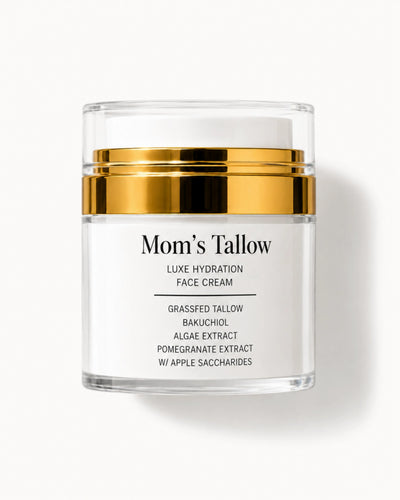
- Luxe Hydration Tallow Face Cream: our lightest, lotion-like cream. A good everyday pick for normal and combination skin, and for anyone trying tallow for the first time. It sits well under makeup.
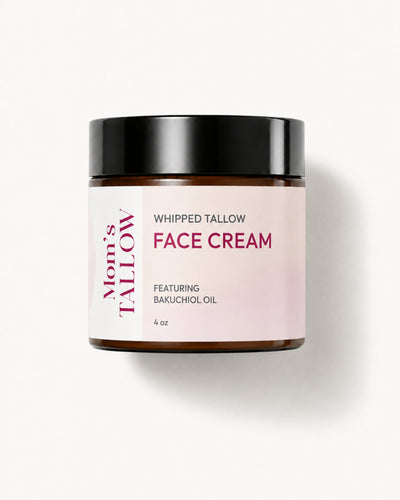
- Cloud Whipped Tallow Face Cream: our richest face cream, whipped with shea and plant oils. Made for skin that feels dry or tight, and a favorite in winter.
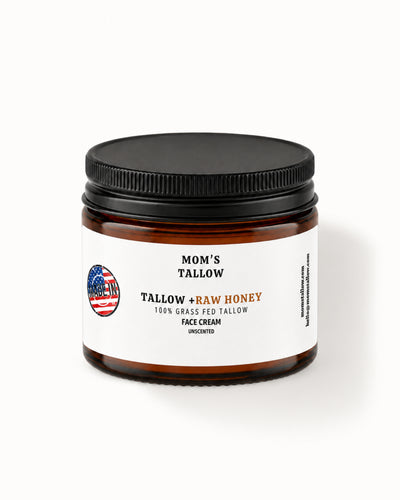
- Skin Serenity Face Cream: just four ingredients (tallow, olive oil, raw honey and vitamin E) and no added fragrance. A good fit if your skin is easily bothered by new products. It contains honey, so skip it if you avoid bee products.
Want a low-cost way to start? The Starter Ritual pairs a 1.7 oz Luxe Hydration with our Tallow Lip Balm. For a side-by-side of all our creams, read Which Tallow Face Cream Is Right for You? US orders over $75 ship free.
FAQ
How do I know which moisturizer is right for my skin?
Start with your skin type, then pick the matching texture: gel or lotion for oily skin, cream for normal or combination, and a richer cream or balm for dry skin. Choose fragrance-free if your skin is sensitive, and test one product for about two weeks.
Should I use a different moisturizer in winter?
Often, yes. Cold air and indoor heating dry skin out, so many people move from a lotion to a cream, or add a richer layer at night.
Do oily skin types need moisturizer?
Many do. A small amount of a light, non-comedogenic gel or lotion can keep skin comfortable without adding shine. If moisturizer makes your skin feel heavy, use less or a lighter texture.
Can I use the same moisturizer morning and night?
Yes. Some people prefer a lighter cream in the morning under sunscreen and makeup, and a richer one at night.
Is the Skin Scan a skin analysis by a doctor?
No. It's a free cosmetic guide based on how your skin looks in the light, and it simply suggests a cream to start with. It doesn't diagnose anything.
Sources: American Academy of Dermatology, "How to pick the right moisturizer for your skin"; Vanicream, "Skin Lotion, Cream or Ointment: How to Choose the Best Moisturizer".