Short answer: wash your face with a gentle cleanser, pat it dry, put nothing on it, and wait 30 minutes. If your whole face feels tight, you likely have dry skin. If it looks shiny all over, oily. Shiny on the forehead, nose and chin but tight on the cheeks means combination. Comfortable everywhere means normal. And if your skin often stings, itches or turns red after new products, it's sensitive, whatever its oil level. Prefer a faster read? Our free 10-second Skin Scan uses your phone camera to suggest a formula.
Knowing your skin type is the single most useful thing you can learn before buying a moisturizer. It decides how rich a cream you need, how much to use, and where to put it. Here are three simple tests you can do at home today, what the results mean, and what each skin type tends to like.
The five skin types, in plain words
Dermatologists generally describe five types. Cleveland Clinic's guide to skin types sums them up like this:
| Skin type | How it usually looks and feels |
|---|---|
| Dry | Makes less oil. Can look dull and feel tight, rough or flaky, especially after washing. |
| Oily | Makes more oil. Looks shiny or greasy, often with visible pores, especially by midday. |
| Combination | Oilier across the T-zone (forehead, nose, chin) with drier cheeks, or the other way around. |
| Normal | The happy medium. Not tight, not shiny, no obvious dry patches. |
| Sensitive | Reacts easily to products, weather or fragrance. Sensitive skin can also be dry, oily or combination. |
That last point matters. “Sensitive” isn't about oil at all; it's about how easily your skin gets bothered. So you can be “dry and sensitive” or “oily and sensitive,” and you'll want to choose with both in mind.
Test 1: The bare-face test (30 minutes)
This is the simplest and most reliable test, and it's the one Cleveland Clinic's dermatologist points to: how your skin looks and feels on its own is the best clue.
- Wash your face with a mild cleanser and lukewarm water.
- Pat it dry with a clean towel. Don't apply toner, serum, moisturizer or makeup.
- Wait 30 minutes. Stay indoors and away from heaters or fans if you can.
- Check your skin in a mirror near a window and notice how it feels when you move your face.
What your results mean
- Tight, maybe a little flaky, no shine anywhere: dry.
- Shiny across your forehead, nose, chin and cheeks: oily.
- Shiny T-zone, comfortable or tight cheeks: combination.
- Comfortable, no tightness, little or no shine: normal.
- Pink, itchy or stinging even after a mild wash: sensitive (note your oil level too).
Test 2: The blotting paper test (2 minutes)
If you can't tell whether you're “a little shiny” or “oily,” blotting paper makes it visible. You can do it straight after the bare-face test.
- After your 30-minute wait, press a clean blotting sheet gently on your forehead and nose for a few seconds.
- Use a second sheet on each cheek.
- Hold the sheets up to the light.
Lots of oil on every sheet points to oily skin. Oil on the T-zone sheet but not the cheek sheets points to combination. Very little oil anywhere points to normal or dry; use how your skin feels (tight or comfortable) to tell those two apart. No blotting paper? A clean tissue works in a pinch.
Test 3: The end-of-day check (no extra time)
One morning reading can mislead you, so check again at the end of a normal day. Ask yourself:
- Do I need to blot or powder my nose and forehead by mid-afternoon? (Leans oily or combination.)
- Does my face feel tight or itchy after a shower, or does makeup cling to dry patches? (Leans dry.)
- Does my moisturizer seem to “disappear” within an hour? (Leans dry.)
- Does my skin react when I try something new, or in wind and cold? (Leans sensitive.)
If your bare-face, blotting and end-of-day answers agree, you have your type. If they don't, go with the end-of-day pattern; it reflects real life better than a quiet half hour in the bathroom.
Why your skin type can change
Your skin type isn't fixed. According to Cleveland Clinic, it can shift over your lifetime and even between seasons, with hormones, stress and some medications all playing a part. Many people who are combination in July feel dry in January, when heating runs and the air is cold. It's worth repeating the bare-face test when the season turns and adjusting your moisturizer with it.
Common mix-ups
“Dehydrated” vs “dry”
Skin can feel tight and look a little dull even when it's shiny by afternoon. That's often oily or combination skin that's been over-washed or under-moisturized, not truly dry skin. Gentler cleansing and a light moisturizer usually help more than a heavy one.
Shiny but tight
If your T-zone shines but your cheeks feel tight, you're combination. Treat your face as two zones instead of choosing one product for everything.
Testing right after a new product
A new serum or a strong cleanser can make your skin act differently for a few days. Test on a quiet day when you haven't changed anything.
What each skin type tends to need
The American Academy of Dermatology's guide to picking a moisturizer gives a simple rule: the drier your skin, the thicker the texture. Lotions are lighter, creams are richer, and balms and ointments are the richest. Here is how that maps to tallow skincare:
| Your type | Texture to look for | A good tallow match | How to use it |
|---|---|---|---|
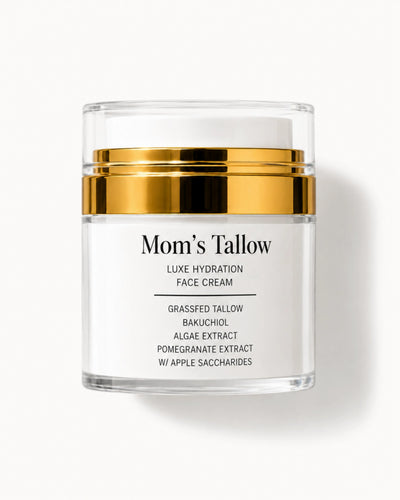
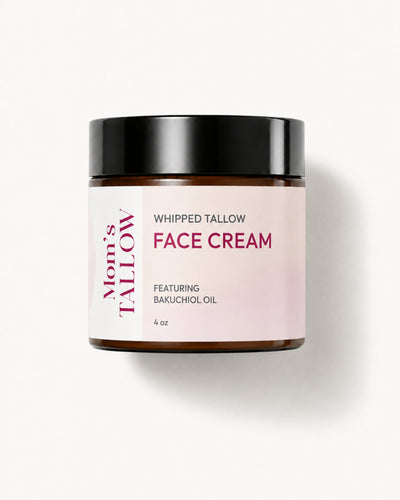
| Dry | Rich cream or balm | Cloud Whipped Tallow Face Cream | Morning and night, on slightly damp skin |
| Normal | Light everyday cream | Luxe Hydration Tallow Face Cream | A pea-sized amount once or twice a day |
| Combination | Light cream, used by zone | Luxe Hydration | Cheeks daily; a thin layer or none on the T-zone |
| Oily | The lightest texture, or very little | Luxe Hydration, sparingly | Half a pea at night, or only on dry spots |
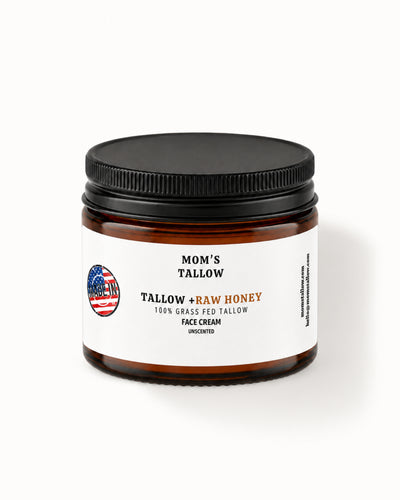
| Sensitive | Short, fragrance-free ingredient list | Skin Serenity Face Cream | Patch test first, then a small amount daily |
A few honest notes. If your skin is very oily, the AAD suggests a gel or even skipping moisturizer; tallow is rich, so it may not be your everyday pick. Read Does Tallow Clog Pores? before you buy. Skin Serenity contains raw honey, so skip it if you avoid bee products. And for very dry spots like elbows or knuckles, a denser balm such as Radiance Revival goes further than a face cream.
For a side-by-side look at all of our creams, see Which Tallow Face Cream Is Right for You? And if you're wondering how often to apply, Can You Use Tallow on Your Face Every Day? covers amounts by skin type.
Prefer a quicker read? Try the free Skin Scan
If you'd rather skip the 30-minute wait, our free Skin Scan takes about 10 seconds. Face a window, look into your phone or laptop camera, and it reads radiance, evenness, shine and calm across your forehead, cheeks and T-zone, then suggests the tallow formula that fits. It's a cosmetic guide based on how your skin looks in the light, not a medical or diagnostic tool, so the bare-face test above is a great way to double-check it. Here's how the Skin Scan works.
Before you try a new moisturizer
- Patch test. Dab a little on your inner arm and wait 24 hours before using it on your face.
- Change one thing at a time so you know what your skin likes.
- Apply to slightly damp skin to help hold in moisture.
- Use sunscreen in the morning, whatever your skin type.
- Ask a dermatologist if your skin stays red, itchy or uncomfortable even with gentle products.
Not sure where to start? The Starter Ritual pairs a 1.7 oz jar of Luxe Hydration with a Tallow Lip Balm, so you can try tallow without committing to a big jar. Every jar is made in small batches in New Jersey.
Frequently asked questions
How do I know my skin type without blotting paper?
Use the bare-face test: wash, pat dry, apply nothing and wait 30 minutes. Tight all over means dry, shiny all over means oily, a shiny T-zone with comfortable or tight cheeks means combination, and comfortable everywhere means normal.
Can my skin type change?
Yes. It can shift with age, hormones, stress and the seasons. Many people find their skin is oilier in summer and drier in winter, so re-test when the weather changes.
Is sensitive skin a skin type?
It's usually treated as one, but it sits on top of your oil level. You can have dry, oily or combination skin that is also sensitive. Look for short, fragrance-free ingredient lists and always patch test.
What's the best moisturizer for combination skin?
A light cream used by zone: a normal amount on drier cheeks and a thin layer, or none, on your T-zone. In our range, Luxe Hydration is our lightest everyday tallow cream and the usual pick.
Is there a free skin type test online?
Our free Skin Scan uses your camera to read shine, evenness, radiance and calm in about 10 seconds and suggests a formula. It's a cosmetic guide, not a medical assessment, so pair it with the at-home tests above.