The short answer: a good winter routine for dry skin is mostly about what you stop doing and when you moisturize. Keep showers short and warm, wash with something gentle, put a cream or balm on while your skin is still damp, and add a richer layer at night and a lip balm by day. Most people need fewer products in winter, not more, just heavier ones.
Cold air outside and dry heated air inside both pull water out of skin, which is why the same moisturizer that worked in July can feel thin by December. Below is a simple morning-and-night routine, what to change for your skin type, and the small habits that make the biggest difference. Everything here is general skincare guidance, not medical advice; if your skin cracks, bleeds or stays sore, see a dermatologist.
Why skin gets drier in winter
Winter air holds less moisture, and indoor heating dries it further. Add long hot showers, more hand washing and wind on exposed skin, and the surface of your skin loses water faster than usual. The Cleveland Clinic points to low indoor humidity and hot showers as two of the main culprits and suggests a humidifier and warm (not hot) water as first steps (Cleveland Clinic).
The fix is not complicated. You want to lose less water (gentler washing, shorter showers) and hold on to more of it (moisturizing at the right moment with a richer texture).
The winter routine at a glance
| Step | Morning | Night |
|---|---|---|
| 1. Cleanse | Lukewarm water only, or a gentle fragrance-free cleanser if you wore heavy sunscreen the day before | Gentle fragrance-free cleanser; no scrubbing |
| 2. Moisturize on damp skin | A lighter cream, a pea-sized amount for the face | A richer cream or balm, slightly more than in the morning |
| 3. Protect | Broad-spectrum SPF 30+ on exposed skin; lip balm | Lip balm; balm on knuckles, elbows and heels |
| 4. Environment | Gloves and a scarf outside | Humidifier in the bedroom |
Morning: keep it short
1. Rinse or wash gently
If your skin feels tight in the morning, you may not need a cleanser at all. A splash of lukewarm water is enough for many dry-skinned people. If you do use one, choose a mild, fragrance-free formula and skip foaming scrubs.
2. Moisturize while skin is still damp
This is the single most useful habit. The American Academy of Dermatology recommends applying moisturizer right after washing, while skin is still damp, and choosing an ointment or cream rather than a lotion, since creams and ointments are more effective for dry skin (AAD). Pat your face with a towel so it is damp, not dripping, then press in a small amount of cream.
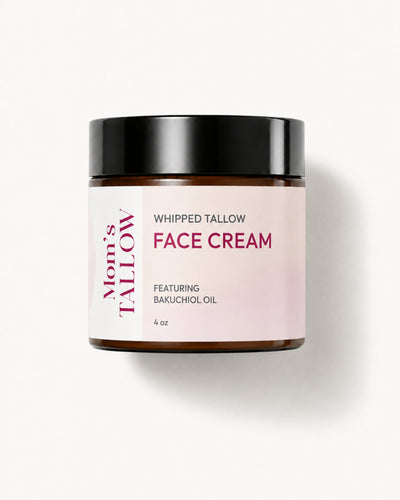
For daytime, a whipped cream works well because it sinks in under makeup or sunscreen. Our Luxe Hydration Tallow Face Cream is the lighter everyday option; if your skin still feels tight by lunch, step up to Cloud Whipped Tallow Face Cream, our richest whipped cream.
3. Sunscreen and lips
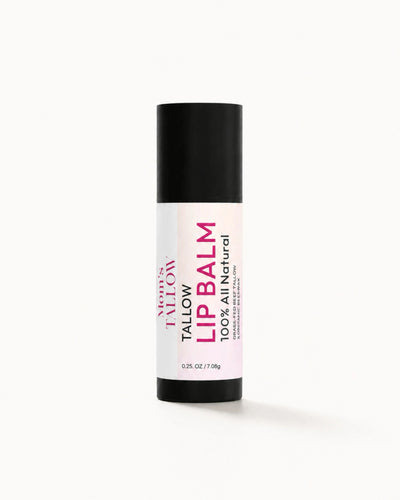
Winter sun still counts, especially with snow reflecting light. The AAD recommends a broad-spectrum, water-resistant sunscreen with SPF 30 or higher on exposed skin, plus lip balm (AAD). Put sunscreen on after your moisturizer has settled for a few minutes. Keep a tallow lip balm in your coat pocket and use it before you head outside, not after your lips already feel rough. A tallow balm has no SPF, so on long days outdoors use an SPF lip product too.
Night: this is where richer products belong
1. Shower short and warm
The AAD suggests keeping showers and baths to 5 to 10 minutes in warm water, closing the bathroom door to keep the steam in, and patting (not rubbing) skin dry (AAD). Hot water feels great on a cold night, but it leaves skin drier afterward.
2. Cleanse once, gently
Wash your face once at night with a gentle cleanser. If you use exfoliating acids or retinoids, winter is a good time to use them less often. Both the AAD and Cleveland Clinic note that exfoliants and some anti-aging products can be more drying in cold months.
3. Moisturize face and body within a few minutes
Right after you pat dry, apply your night cream to your face and a body butter to arms and legs. At night you can use slightly more, since you don't need it to absorb fully. If your face feels very dry, a fragrance-free cream with a short ingredient list such as Skin Serenity Face Cream (grass-fed tallow, olive oil, raw honey and vitamin E) is a simple choice. For the body, Avocado Tallow Body Butter covers a lot of skin with a small scoop.
4. Seal the spots that crack first
Knuckles, cuticles, elbows and heels lose moisture fastest. A dense balm such as Radiance Revival Tallow Balm, warmed between your fingertips and pressed in, works well as a last step. For heels, put on cotton socks afterward.
5. Run a humidifier
The AAD suggests a portable humidifier in the bedroom while you sleep, cleaned regularly so it doesn't grow mold. This helps every other step work better.
Adjust the routine for your skin type
| Skin type | What to change in winter | Texture to try |
|---|---|---|
| Dry | Moisturize morning and night, add balm to dry patches, skip foaming cleansers | Rich whipped cream by day, balm on dry spots at night |
| Normal | Swap to a slightly richer cream; keep everything else the same | Light whipped cream |
| Combination | Richer cream on cheeks, lighter on the T-zone | Light whipped cream, a thin layer |
| Oily | Don't stop moisturizing; use a small amount and keep cleansing gentle | A very thin layer of a light cream at night |
| Easily irritated | Fragrance-free everything, fewer products, patch test anything new | A short-ingredient, fragrance-free cream |
Not sure which type you are this season? Skin often reads drier in winter than in summer. Our guide What's My Skin Type? 3 Easy At-Home Tests walks through simple checks, or take the free 10-second Skin Scan. It looks at how your skin appears in the light and suggests which of our creams to start with. It's a cosmetic guide, not a medical or diagnostic tool.
Habits that matter more than products
- Moisturize after every hand wash. The AAD recommends a hand cream after each hand washing and gloves for dishes and other wet chores (AAD).
- Choose "fragrance-free," not just "unscented." The AAD notes that unscented products can still contain chemicals that mask odors, which can bother dry skin.
- Cover up outside. Gloves, a scarf and a hat keep wind off the skin that dries out fastest (AAD, cold weather and your skin).
- Turn the heat down a notch. Warmer layers and blankets dry the air less than a hotter furnace.
- Wear soft fabrics next to dry skin and consider a fragrance-free laundry detergent.
Common winter mistakes
- Moisturizing only once, on dry skin. Twice a day on damp skin does far more than one heavy coat on dry skin.
- Adding more products. Five layers of serums can irritate. Winter is a good time to simplify to cleanser, cream, sunscreen and lip balm.
- Licking chapped lips. It makes them drier. Reach for lip balm instead.
- Over-exfoliating flakes. Scrubbing flaky skin often makes it rougher. Moisturize first and exfoliate less.
- Switching to a lotion because it "absorbs faster." Lotions have more water; creams and balms tend to hold up better in winter. Our post Tallow vs Lotion explains the difference.
Where tallow fits
Tallow is a solid fat with a texture close to a rich cream or balm, which is why many people reach for it in winter. Whipped tallow creams spread easily on the face; denser balms suit hands, heels and elbows. It isn't the only option, and it isn't right for everyone. If your skin feels heavy or congested with rich textures, use a thinner layer or keep the balm for body spots. For more on using it, see Is Beef Tallow Good for Dry Skin? and Best Ingredients for Dry, Cracked Hands.
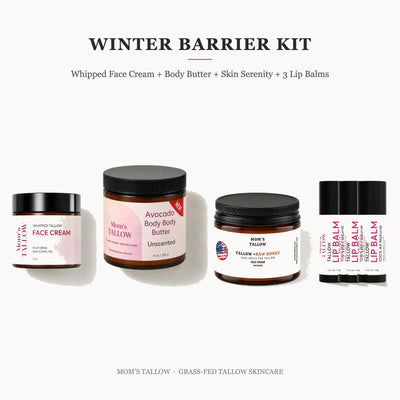
If you want one box for the whole season, the Winter Barrier Kit bundles Cloud Whipped Face Cream, Avocado Body Butter, Skin Serenity and three lip balms, made in small batches in New Jersey. Orders over $75 ship free in the US.
Frequently asked questions
Should I change my skincare routine in winter?
Usually yes, but only a little. Keep the same simple steps and swap to a richer moisturizer, gentler cleansing, shorter warm showers and a lip balm. Use exfoliants and retinoids less often if your skin feels tight.
Is a cream or a lotion better for dry winter skin?
The AAD recommends creams or ointments over lotions for dry skin. Lotions contain more water and can feel thin in cold, dry air.
When is the best time to moisturize?
Within a few minutes of washing, while skin is still damp. That goes for your face, body and hands after each wash.
Do I need sunscreen in winter?
Yes, on exposed skin. The AAD recommends broad-spectrum SPF 30 or higher, and snow reflects sunlight back onto your face.
How do I know which face cream to use this winter?
Start with your skin type and how tight your face feels by midday. If you're unsure, the free Skin Scan suggests a starting cream in about 10 seconds.