Short answer: "Fragrance-free" is the label to look for if scent bothers your skin. "Unscented" only means a product doesn't smell of much, and the FDA notes that some unscented products may still contain fragrance ingredients. Fragrance adds nothing to how a moisturizer works, and dermatologists call it a common irritant, so if your skin is dry or easily irritated, choosing fragrance-free products (and reading the ingredient list) is a simple, low-effort switch.
Fragrance is in a huge share of skincare, and most people use it without a problem. But if creams sting, your skin turns pink after a new product, or you just want a simpler routine, it's one of the first things worth cutting. Here's what the labels actually mean and how to make the switch.
Fragrance-free vs unscented: what's the difference?
| Label | What it usually means | Watch out for |
|---|---|---|
| Fragrance-free | No fragrance ingredients added to give the product a scent | Plant extracts or essential oils listed for other reasons; check the list |
| Unscented | The product has little or no noticeable smell | May contain masking fragrance used to cover the smell of other ingredients |
| "Naturally scented" or "scented with essential oils" | Scent comes from plant oils instead of synthetic fragrance | Still fragrance; still a possible irritant for some people |
The FDA says it plainly: "Even some products labeled 'unscented' may contain fragrance ingredients," and suggests people concerned about sensitivities choose fragrance-free products and check the ingredient list carefully (FDA). Cleveland Clinic dermatologist Dr. Shilpi Khetarpal gives the same advice: look for "fragrance-free" and know that "unscented" products can still contain some fragrance (Cleveland Clinic).
Why fragrance is worth skipping on dry or sensitive skin
- It doesn't moisturize. Fragrance is there for the experience. The work in a moisturizer is done by its oils, fats, butters and humectants.
- Dermatologists call it an irritant. Dr. Khetarpal describes fragrance as "an irritant to our skin," says it can draw moisture out, and notes people can be allergic to its ingredients (Cleveland Clinic).
- You can't see what's in it. Under US rules, fragrance ingredients can be listed simply as "Fragrance" because the blend is treated as a trade secret (FDA). One word can stand for many components, which makes it hard to tell what your skin is reacting to.
- Leave-on products matter most. A face cream sits on your skin for hours; a hand soap rinses off in seconds. Dr. Khetarpal suggests that if you enjoy scent, you keep it to things like hand soap or lotion rather than everything you use.
Most people tolerate some fragrance just fine. This isn't about fear. It's about removing an ingredient that does nothing for your skin when your skin is already asking for less.
What about essential oils?
Natural doesn't always mean gentle. Lavender, citrus, peppermint, tea tree and other essential oils add scent, and some people react to them just as they would to synthetic fragrance. The FDA notes there is no regulatory definition for "essential oils" and that the law treats plant ingredients the same as ingredients from any other source (FDA).
A lightly scented, essential-oil product may be perfectly fine for you. But if you're trying to find out what's bothering your skin, treat essential oils as fragrance and remove them too.
Who should switch to fragrance-free?
- Your skin stings, burns or turns pink when you apply moisturizer.
- Your skin feels dry no matter how much cream you use.
- You're in a dry season, washing often, or using retinoids or exfoliating acids that already make skin feel sensitive.
- You're buying for someone else, like a gift, and don't know their skin.
- You simply prefer a short, readable routine. See minimal ingredient skincare for how to build one.
If a product causes a reaction that doesn't settle once you stop using it, see a dermatologist.
How to read a label in 30 seconds
- Look for the words. "Fragrance-free" on the front is a good start, but check the back too.
- Scan for scent ingredients. "Fragrance," "parfum," "aroma" or "flavor" mean added scent. Essential oils usually appear by plant name, often with "oil" after it (for example, lavender oil).
- Notice how long the list is. Shorter lists make it easier to spot what your skin likes and doesn't.
- Check the order. Ingredients are listed from most to least, so what comes first makes up most of the product.
- Patch test anything new. Apply a small amount to the inside of your arm or behind your ear for a few days before using it on your face.
"But fragrance-free products still smell a bit"
That's normal. Fragrance-free means nothing was added for scent, not that the raw ingredients have no smell. Tallow, beeswax, shea butter and honey all have a faint natural scent of their own. Well-rendered tallow should smell like very little; if a tallow product smells strongly beefy or sour, see what tallow should (and shouldn't) smell like.
How to switch without starting over
| Step | What to do |
|---|---|
| 1. Start with leave-on face products | Swap your moisturizer first, since it stays on longest |
| 2. Keep everything else the same for 2-3 weeks | So you can tell what made the difference |
| 3. Move to body and lips | Body cream and lip balm are next; lips are thin and easily bothered |
| 4. Keep scent where it rinses off | If you love fragrance, enjoy it in hand soap or perfume rather than face cream |
Need help picking a texture? Our guide to choosing a fragrance-free face moisturizer and how to find the right moisturizer walk through skin types, or take the free 10-second Skin Scan, a cosmetic guide based on how your skin looks in the light.
Where our products fit
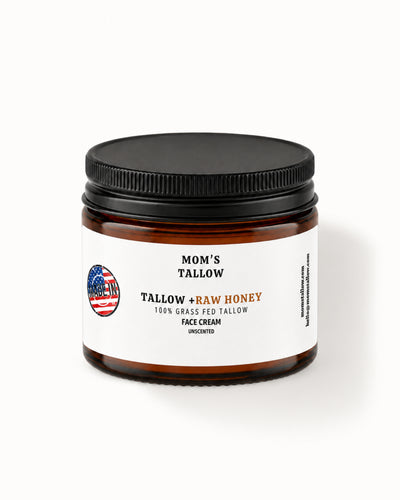
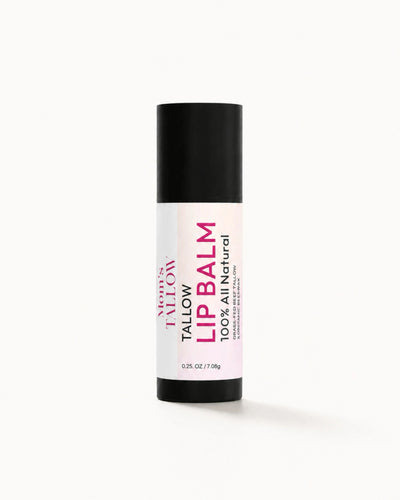
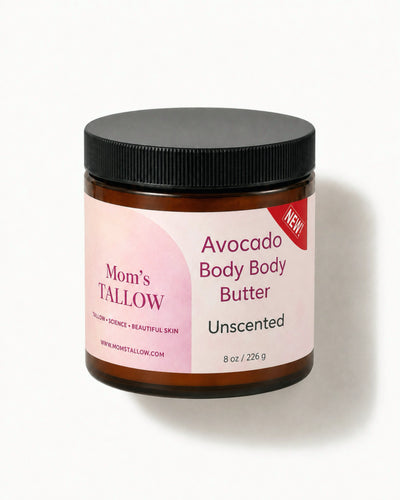
Always check each product's ingredient list, since some of our formulas do include botanical oils. For a short, simple option, Skin Serenity is made with grass-fed tallow and raw honey. Our tallow lip balm is tallow and beeswax, and the Avocado Body Butter comes in an unscented version. Lip balm is our simplest product; see fragrance-free lip balm: how to choose one. Everything is made in small batches in New Jersey, and Subscribe & Save takes 15% off every refill.
FAQ
Is fragrance-free the same as unscented?
No. Fragrance-free means no fragrance ingredients were added. Unscented means the product doesn't smell much, and it may still contain masking fragrance.
Is fragrance-free skincare better?
For dry or easily irritated skin, dermatologists generally suggest it, because fragrance adds nothing to how a product works and is a common irritant. If scented products have never bothered you, you don't have to switch.
Are essential oils fragrance?
They add scent, so for sensitive skin it's simplest to treat them as fragrance. Some people react to them the same way.
Why does my fragrance-free cream still smell?
Natural ingredients like tallow, beeswax, honey and butters have a faint scent of their own. Fragrance-free only means nothing was added for scent.
Is fragrance-free skincare a good gift?
Yes, especially when you don't know the person's skin. It's the safer choice for anyone sensitive to scent.
Made in small batches in New Jersey. Free US shipping on orders over $75.