Short answer: Minimal ingredient skincare means using fewer products, each with a short ingredient list where you can tell what every ingredient is there for. A good minimal routine is usually three steps: a gentle cleanser, a moisturizer that suits your skin type, and sunscreen in the morning. Shorter isn't automatically better or gentler, but it makes it much easier to see what you're putting on your skin and to spot what doesn't agree with you.
A crowded bathroom shelf can make skincare feel complicated. Minimal skincare is the opposite approach: fewer jars, fewer ingredients, and more attention to what each one does. Here's how to do it without falling for marketing.
What "minimal ingredient" really means
There's no legal definition of "minimal," "clean" or "simple" on a skincare label, so brands use these words loosely. A useful working definition:
- Short: often under 10 ingredients for a moisturizer or balm.
- Readable: you can recognize most of the ingredients or look them up quickly.
- Purposeful: each ingredient has a job (the base, texture, preservation, or scent if any).
- Transparent: fragrance is named clearly, not hidden.
A two-ingredient balm isn't automatically better than an eight-ingredient cream. A product with water in it, for example, needs a preservative to stay safe, and that's a good thing. Minimal means nothing extra, not nothing at all.
Why people switch to minimal skincare
- Easier to spot what bothers you. If your skin reacts, a short list leaves fewer suspects.
- Less product overlap. Many routines layer three products that do the same job.
- Lower cost and less waste. Fewer jars, used up before they go off.
- Simpler habits. A routine you can do in two minutes is one you'll actually keep.
How to read an ingredient list in 60 seconds
US cosmetic labels follow FDA rules: "The ingredients must be listed in descending order of predominance," and ingredients at 1% or less can be listed in any order after the rest (FDA Cosmetics Labeling Guide). That gives you a quick method:
- Read the first three to five ingredients. They make up most of the product. In a cream, that's often water plus oils; in a balm, it's fats, butters and waxes.
- Look for "fragrance" or "parfum." The FDA allows fragrance compounds to be listed simply as "fragrance," so you can't see what's inside it. If your skin is sensitive, this is the first word to look for.
- Check for water. If water (aqua) is listed, there should be a preservative too. If there's no water, the product is anhydrous and generally doesn't need one.
- Count and question. If you can't tell why something is there, look it up or move on.
Our moisturizer label guide goes further on what to look for and what people choose to skip.
A simple 3-step minimal routine
| Step | Morning | Night |
|---|---|---|
| 1. Cleanse | Rinse with lukewarm water, or a gentle cleanser if you need it | Gentle cleanser; remove sunscreen and makeup |
| 2. Moisturize | Light layer on slightly damp skin | Richer layer on dry areas |
| 3. Protect | Broad-spectrum sunscreen | Lip balm, hand balm if needed |
The American Academy of Dermatology recommends applying moisturizer while skin is still damp, choosing products labeled "fragrance-free," and notes that "ointments and creams add more moisture to skin and are more effective than lotions" for dry skin (AAD). That's a minimal routine in a sentence.
Want the full step order, including where serums go? See our tallow skincare routine.
Picking a minimal moisturizer for your skin type
| Skin type | Texture to try | Tip |
|---|---|---|
| Dry | Balm or rich cream | Apply to damp skin; a little goes far |
| Normal | Light cream or whipped balm | Use less in the morning, more at night |
| Combination | Light cream; balm only on dry patches | Skip heavy layers on the T-zone |
| Oily or breakout-prone | Lightweight, water-based lotion or gel | Rich balms may feel too heavy |
| Easily irritated | Fragrance-free, shortest list you can find | Patch test for a day or two first |
Not sure where you land? Take the free 10-second Skin Scan, a cosmetic guide based on how your skin looks in the light, or try our 3 at-home skin type tests.
Where tallow fits in a minimal routine
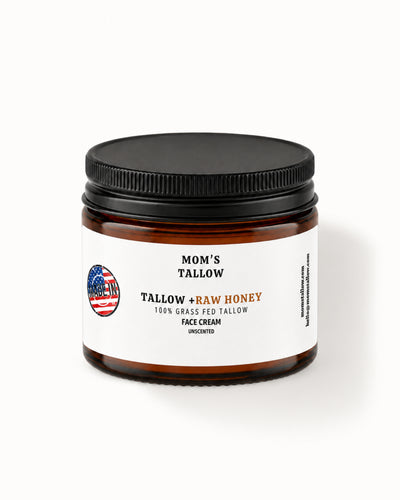
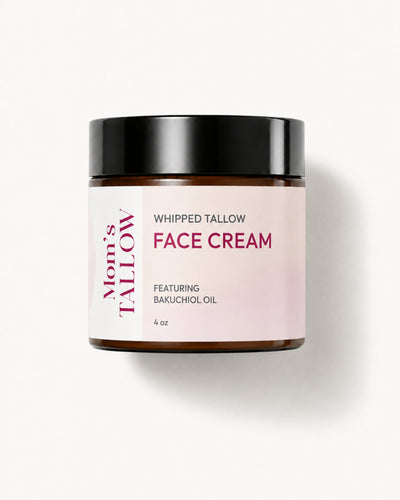
Tallow balms are a natural fit for minimal skincare because they're anhydrous (no water) and often have short lists: tallow plus an oil or two, sometimes beeswax or honey. One jar can cover face, hands, elbows and heels, which cuts down the number of products you need.
It isn't for everyone. Tallow is rich, and dermatologists caution that thick balms can feel too heavy or clog pores on oily or breakout-prone skin. If that's you, use it only on dry areas or pick a lighter moisturizer. Our honest post on whether tallow clogs pores covers it by skin type.
Some short-list options from our kitchen in New Jersey:
- Skin Serenity: tallow and raw honey, made for dry skin that's easily irritated.
- Cloud Whipped: tallow whipped light for everyday face use.
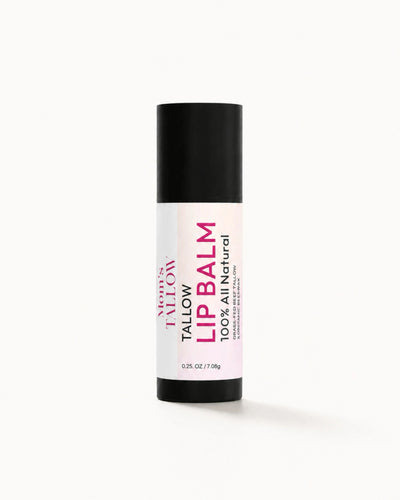
- Tallow Lip Balm: grass-fed tallow and organic beeswax.
Once you find your one or two favorites, Subscribe & Save takes 15% off every refill, every 30, 60 or 90 days.
Common mistakes when simplifying
- Cutting sunscreen. It stays, even in a three-step routine.
- Swapping everything at once. Change one product at a time and give it two weeks, so you know what's working.
- Assuming "natural" means gentle. Essential oils and plant extracts can bother sensitive skin too. Our fragrance-free guide explains why.
- Using too much. With balms especially, a pea-sized amount is usually enough for the face.
- Skipping the patch test. Try a new product on a small area for a day or two first.
If you have a persistent skin concern, a dermatologist can tailor a routine to you.
FAQ
What is minimal ingredient skincare?
It's using fewer products with short, readable ingredient lists, where every ingredient has a clear purpose. There's no official definition, so read the label rather than relying on the word "minimal."
Are fewer ingredients better for sensitive skin?
Not automatically, but a shorter list makes it easier to avoid and identify what bothers you. Fragrance-free products are a sensible starting point, per the AAD.
How many products do I really need?
For most people, three: a gentle cleanser, a moisturizer that suits your skin type, and sunscreen in the morning. Add anything else only for a specific reason.
Do minimal products need preservatives?
If they contain water, yes; preservatives keep them safe to use. Anhydrous products like balms have no water and generally don't need one, but keep them clean, dry and away from heat.
Can one balm work for face and body?
Often, yes, if the texture suits your face. Many people use a lighter whipped tallow on the face and a richer balm on hands, elbows and heels.
Made in small batches in New Jersey. Free US shipping on orders over $75.