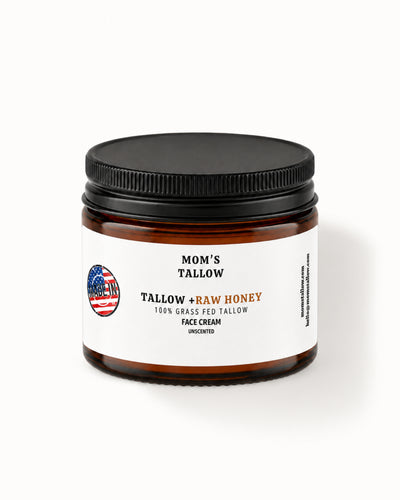
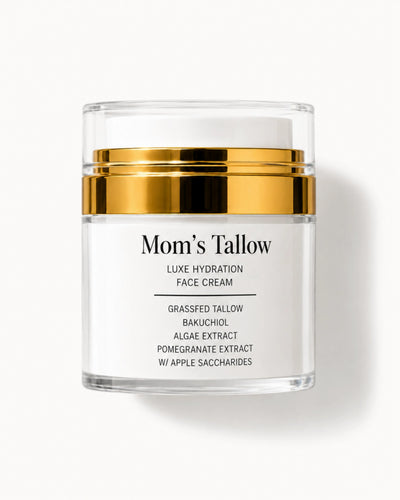
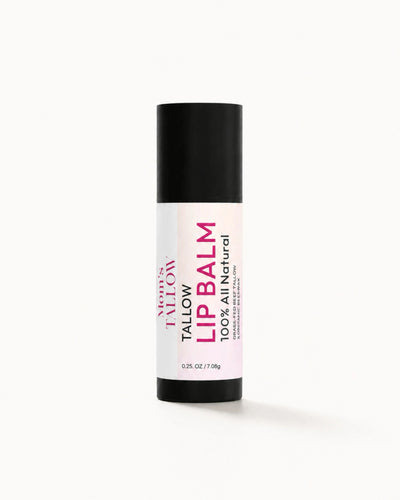
Short answer: well-made tallow skincare should smell like almost nothing. Fresh, properly rendered tallow has at most a faint, mild, slightly sweet or buttery note that fades within a minute or two on your skin. If a jar smells clearly like beef, roast or a deep fryer, that usually points to how the fat was rendered or stored, not to tallow itself. A sharp, sour, crayon-like or "old oil" smell means the fat has gone rancid, and that jar should be replaced.
That's the quick version. Below is what actually shapes the smell of a tallow cream or balm, how to tell normal from not-okay, and what to do if you're sensitive to scent.
Why people expect tallow to smell like beef
Tallow is rendered beef fat, so it's natural to picture the smell of a pan after cooking steak. And some tallow really does smell that way. If you've ever rendered fat at home, you know the kitchen fills with a rich, meaty aroma. Homemade balms, and some commercial ones, carry part of that smell into the jar.
It's one of the most common hesitations people have before trying tallow. Look through reviews of almost any tallow brand and you'll see the same worries come up: will it smell beefy, will it feel greasy, will it melt in the mail. The smell question is fair, and the honest answer is that it depends on the maker.
What decides how tallow skincare smells
Four things do most of the work.
1. The fat that goes in
Skincare tallow is usually made from suet, the firm fat around the kidneys and loins. It renders cleaner and milder than fat trimmings from other cuts, which carry more meat and more flavor. Fresh suet that's rendered quickly also smells milder than fat that sat around before it was processed.
2. How it's rendered
Rendering means gently melting the fat and straining out everything that isn't pure fat. There are two common methods:
- Dry rendering melts the fat on its own, slowly. It's simple, but it's easy to brown or scorch, which gives a deeper color and a stronger, roasted aroma.
- Wet rendering melts the fat with water. The water acts as a buffer against scorching and helps carry away impurities, and the fat is lifted off once it cools. Makers who use it generally find it gives a milder-smelling tallow (here's one tallow maker's comparison of the two methods).
Low, steady heat and careful straining matter more than any single trick. The goal is to remove the bits of tissue and protein that carry the "meaty" smell, leaving clean fat behind.
3. Filtering and freshness
Tallow that's strained through a fine filter, poured into clean jars and used while fresh smells cleaner. Like any natural fat, tallow can slowly oxidize, especially when it's kept somewhere hot. That's why even a mainstream news look at the tallow trend pointed out that it can go rancid over time in hot weather (Michigan Public, 2025). Small batches help here: a jar made recently hasn't had time to pick up off-notes.
4. What it's blended with
Most tallow creams aren't 100% tallow. Shea butter, olive oil, jojoba, beeswax and raw honey each have their own faint scent, and together they soften whatever note the tallow has. Some brands add essential oils to mask a strong tallow smell. If a product leans heavily on fragrance, it's fair to ask what it's covering.
Normal smell vs. a red flag
Use this as a quick check when you open a new jar.
| What you notice | What it usually means | What to do |
|---|---|---|
| Almost nothing, or a faint buttery or waxy note | Clean, fresh tallow | Enjoy it |
| The scent of the other ingredients (honey, shea, a light botanical note) | Normal for a blended cream | Enjoy it |
| A mild "fatty" smell that fades after a minute on skin | Normal for many pure tallow balms | Fine to use; try a blended formula if it bothers you |
| Clearly beefy, roasted or fried | Fat was likely scorched or not well filtered | Safe to use if fresh, but try a cleaner-rendered brand |
| Sour, sharp, crayon-like, or like old frying oil | Rancid (oxidized) fat | Stop using it and replace the jar |
One more clue: color. Grass-fed tallow is often a soft cream or pale yellow, because carotenoids from pasture end up in the fat. A review in Nutrition Journal notes that fat from grass-finished beef "may have a yellowish appearance" for exactly this reason (Daley et al., 2010). A gentle yellow tint is normal. Dark tan or brown streaks can be a sign the fat was overheated.
Why tallow can smell stronger in the jar than on your skin
People are often surprised that a cream smells a little "fatty" when they open the lid but not at all once it's on. There's a simple reason. In the jar, you're smelling a closed space that has collected scent. On your skin, a pea-sized amount spreads very thin and the faint note disperses within a minute or two. If you're judging a new product, rub a small amount on the back of your hand and smell it after a couple of minutes, not straight from the jar.
Temperature plays a part too. A jar that's been sitting in a hot car or a sunny window will smell stronger, and heat speeds up oxidation. Keep tallow skincare somewhere cool and out of direct sun.
How to store tallow skincare so it stays fresh
- Keep it cool and out of sunlight. A bathroom cabinet or bedroom drawer is better than a windowsill.
- Close the lid tightly after each use to limit air exposure.
- Use clean, dry fingers or a small spatula, so water and residue don't get into the jar.
- Refrigerate in hot weather if your home runs warm. It'll firm up; warm a little between your fingertips before applying.
- Trust your nose. If the smell changes from neutral to sour or sharp, it's time for a new jar.
Not sure how much to use or when? Our guide on how to use tallow balm walks through amounts and routines.
If you're sensitive to scent
If strong smells bother you, look for three things: a short ingredient list, no added fragrance or essential oils, and a maker who renders in small batches so each jar is fresh.
At Mom's Tallow, our grass-fed tallow is rendered and filtered in small batches in New Jersey, so our finished creams don't carry a beefy scent. If you want the gentlest option, these are good places to start:
- Skin Serenity Face Cream: just four ingredients (grass-fed tallow, organic olive oil, raw honey and vitamin E) with no added fragrance. Skip it if you avoid bee products.
- Luxe Hydration Tallow Face Cream: our lightest, best-selling cream, blended with shea butter and bakuchiol. It sinks in fast and leaves no lingering scent.
- Tallow Lip Balm: grass-fed tallow and organic beeswax, and an easy, low-cost way to see how tallow feels and smells before buying a bigger jar.
The Starter Ritual pairs a jar of Luxe Hydration with the lip balm, if you want to try both. You can browse everything in our skincare collection, or compare our creams side by side in Which Tallow Face Cream Is Right for You?
Before you try any new tallow product
Whatever brand you choose, do a quick patch test. Dab a little on your inner arm and wait at least 24 hours before using it on your face. The dermatologist interviewed in the Michigan Public piece recommends testing a small area before wider use, and that's good practice with any new skincare. New to tallow in general? A Simple Guide to Tallow Skincare covers the basics.
Frequently asked questions
Does tallow balm smell bad?
It shouldn't. Fresh, well-rendered tallow has little to no smell, or a faint buttery note that fades quickly. A strong beefy smell usually comes from scorched or poorly filtered fat, and a sour or sharp smell means the tallow has gone rancid.
Why does my tallow balm smell like beef?
Most likely the fat was rendered at a high temperature, browned slightly, or wasn't strained finely enough, so bits of protein carried the meaty aroma into the balm. It's common with homemade tallow. Cleaner rendering, usually low and slow, often with water, gives a milder result.
How can I tell if tallow has gone bad?
Smell it. Rancid tallow smells sour, sharp, stale or like old frying oil, and sometimes looks darker or feels grainy in a way it didn't before. If the smell has clearly changed from when you bought it, replace the jar.
Will people be able to smell tallow on me?
With a well-made cream, no. A thin layer absorbs within a few minutes, and any faint note disappears quickly. If you can still smell beef on your skin after five minutes, the product probably wasn't rendered cleanly.
Is unscented tallow better?
If you're sensitive to fragrance, often yes. An unscented formula with a short ingredient list lets you see exactly what you're putting on your skin. Just make sure "unscented" doesn't mean fragrance was used to cover a strong tallow smell. Check the full ingredient list.