The short answer: tallow and jojoba oil are both popular face moisturizers with short ingredient lists, but they are very different things. Tallow is a fat made of triglycerides, the same kind of fat your skin's own oil is mostly built from. Jojoba "oil" is actually a liquid wax: about 97% wax esters, the other major type of fat in skin oil. Jojoba is lighter, runnier and almost scentless, so it suits oily or combination skin and people who want a thin, fast-sinking layer. Tallow is richer and more cushiony, so it tends to suit dry skin, cold weather and anyone who wants moisture that stays put. Many people use a little of both.
We make tallow skincare in small batches in New Jersey, and "should I use tallow or jojoba?" is one of the questions we hear most from people moving to a simpler routine. Below we compare what each one is, how they feel, how they suit different skin types, how they keep, what they cost, and how to choose.
What tallow and jojoba oil actually are
Tallow: a soft, solid fat
Tallow is rendered beef fat. Like most animal and vegetable fats, it's made of triglycerides. According to the composition listed on Wikipedia's tallow entry, beef tallow is roughly 36% oleic acid, 25% palmitic acid and 19% stearic acid. The stearic and palmitic acids keep it firm in the jar, and the oleic acid keeps it soft enough to melt between your fingers. That's why tallow skincare comes as a balm or a whipped cream, not a liquid.
Jojoba: a liquid wax, not a true oil
Jojoba is pressed from the seeds of a desert shrub. Wikipedia's jojoba oil entry describes it as a wax made almost entirely (about 97%) of wax esters, long-chain fatty acids joined to long-chain alcohols, with only a small amount of triglycerides. That's why "jojoba oil" and "jojoba wax" mean the same thing. It stays liquid down to about 50°F, so it pours like an oil in any normal room.
Is either one "like your skin's own oil"?
You'll see both described online as matching your skin's natural oil (sebum). The honest version is more interesting. Human sebum is a mix of several kinds of fat. When researchers built a synthetic sebum for lab testing, their published formula used about 45% triglycerides, 25% wax esters (and they used jojoba oil to supply them), 17% fatty acids and 12% squalene.
So tallow and jojoba each resemble a different part of skin oil. Tallow is triglycerides; jojoba is wax esters. Neither one is sebum, and that's fine. What matters day to day is how each feels on your skin and how your skin responds.
Tallow vs jojoba oil at a glance
| Grass-fed tallow | Jojoba oil | |
|---|---|---|
| What it is | A fat (triglycerides) | A liquid wax (about 97% wax esters) |
| In the bottle or jar | Firm balm or soft whipped cream | Clear to golden liquid |
| On skin | Cushiony; sinks in over a few minutes | Thin and silky; sinks in quickly |
| How long it stays put | Leaves a soft, lasting layer | Light layer that fades sooner |
| Smell | Mild to none when well rendered | Very faint, nutty or none |
| Usually suits | Dry, normal and mature-looking skin; winter | Oily, combination and normal skin; summer |
| Other uses | Lips, hands, heels, cuticles; cooking (food-grade tallow) | Hair ends, cuticles, beard, makeup removal |
How they feel on your face
Jojoba spreads like a light serum. Two or three drops cover a whole face, it sinks in fast, and it leaves a satin finish rather than a shine. That's why it's often used as a carrier oil in serums and as a first oil for people who are nervous about oils on their face.
Tallow feels richer. You warm a small amount between your fingertips and press it in, and after a few minutes it settles into a soft, almost velvety finish. It doesn't move or thin out the way a liquid does, which is why people reach for it on cheeks that feel tight by noon, around the mouth and nose in winter, and on hands.
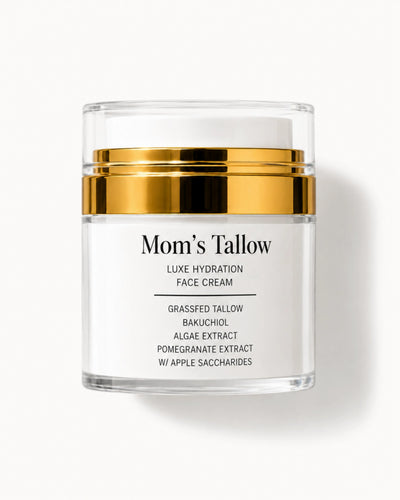
Texture also depends on the product. A whipped tallow cream like our Luxe Hydration Tallow Face Cream feels far lighter than a dense balm. If a hard balm felt too heavy for you, try a whipped cream before deciding tallow isn't for you. We explain the difference in Whipped Tallow vs Tallow Balm.
Which suits your skin type?
Skin is personal, so treat this as a starting point, not a rule.
- Oily or shiny by midday: jojoba is the gentler place to start because it's so light. If you want to try tallow, use a whipped cream, a very thin layer, at night only, and watch how your skin looks over a couple of weeks. Our guide Does Tallow Clog Pores? goes into this in detail.
- Combination: many people do well with jojoba (or nothing) on the forehead and nose and a little tallow on the cheeks.
- Dry or tight-feeling: tallow usually feels more comforting and lasts longer. Jojoba alone may feel like it "disappears."
- Sensitive-feeling: both are simple, but simple isn't the same as right for everyone. Patch test either one along your jaw for a few days first, and pick unscented versions with no essential oils.
- Mature-looking skin: people often like the cushion of tallow, especially in dry indoor air. A face cream with added ingredients, like bakuchiol in our Luxe and Cloud Whipped creams, is a separate choice from the base fat.
Not sure where your skin falls? Our free 10-second Skin Scan looks at how your skin reads in the light, such as shine, evenness and radiance, and suggests a starting formula. It's a cosmetic guide, not a medical or diagnostic test, and it's an easy way to pick between our creams.
How to use tallow and jojoba together
You don't have to choose. The two layer well because one is light and liquid and the other is richer and solid.
- Wash your face and leave it slightly damp.
- Press in 2 or 3 drops of jojoba oil if you use it.
- Follow with a pea-sized amount of tallow cream, warmed between your fingertips, on the areas that feel driest. Use less on oily zones.
- In summer or on oily days, skip the tallow in the morning and use it at night. In winter, flip it: tallow morning and night, jojoba optional.
Some homemade balms blend jojoba into tallow to make it softer and easier to spread. That works, but it changes the texture, so make a small test batch first.
Smell, storage and shelf life
Smell: golden jojoba has a faint nutty smell; clear, refined jojoba smells like almost nothing. Well-rendered tallow should smell mild or like nothing, too. A strong beefy smell points to how the tallow was rendered, not to tallow itself. See Does Tallow Skincare Smell?
Stability: jojoba is known for keeping well. Because it's mostly wax esters rather than triglycerides, it resists going rancid better than many plant oils; Wikipedia's entry notes it is more stable than safflower, canola and almond oil. Tallow is a fairly stable fat too, as long as it's kept closed, cool and out of direct sun, and scooped with clean, dry fingers. Our guide How Long Does Tallow Balm Last? covers the signs that a jar is past its best.
Heat and travel: jojoba stays liquid in any normal temperature, so use a bottle that seals well. Tallow softens in a hot car but stays a balm in a normal room. A whipped cream that melts and re-sets loses its fluff but is still fine to use.
Cost and convenience
Plain jojoba oil is widely sold and a small bottle lasts a long time, since you only use a few drops. Tallow skincare usually costs more because it takes longer to source, render and whip in small batches, but a little goes a long way: a 4 oz jar used once or twice a day on the face typically lasts months. If you also cook, food-grade tallow does double duty in the kitchen, which jojoba can't (it isn't a food oil).
Which should you choose?
- Choose jojoba if your skin runs oily, you want the lightest possible layer, you live somewhere hot and humid, or you want one oil for your face, hair ends and cuticles.
- Choose tallow if your skin feels dry or tight, you want moisture that lasts through the day, you live somewhere cold or dry, or you want one jar that also works on lips, hands and heels.
- Use both if your face is oily in some spots and dry in others, or your needs change with the seasons.
Where to start with tallow
- For most faces: Luxe Hydration Tallow Face Cream, our best seller, is light and whipped, with 1% bakuchiol and shea butter.
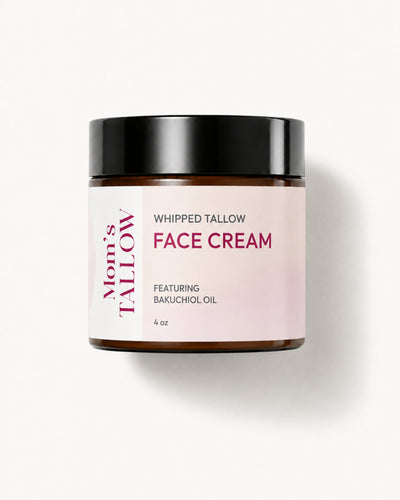
- For drier skin or winter: Cloud Whipped Tallow Face Cream is our richer, cushiony whipped cream.
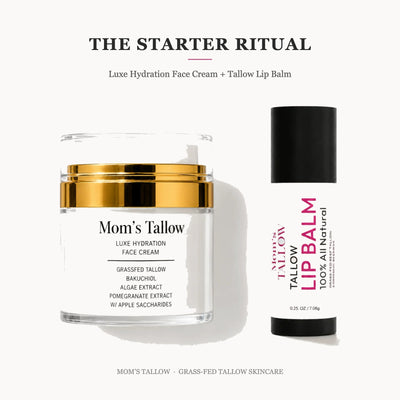
- To try it for less: The Starter Ritual pairs a 1.7 oz Luxe with our tallow and beeswax lip balm.
Comparing other ingredients too? See Tallow vs Coconut Oil for Skin and Tallow vs Shea Butter for Skin, or compare our creams side by side in Which Tallow Face Cream Is Right for You?
FAQ
Is tallow or jojoba oil better for your face?
Neither is better for everyone. Jojoba is lighter and usually suits oily or combination skin and hot weather. Tallow is richer and usually suits dry skin and cold weather. If your face is mixed, use jojoba on oily areas and tallow on dry ones.
Can I mix tallow and jojoba oil?
Yes. You can layer a few drops of jojoba under a tallow cream, or blend jojoba into a tallow balm to soften it. Adding jojoba makes the mix softer and more spreadable, so start with a small amount.
Is jojoba oil really an oil?
Not technically. It's a liquid wax made mostly of wax esters, which is why it's also called jojoba wax. It looks and pours like an oil because it stays liquid down to about 50°F.
Which one lasts longer on the skin?
Tallow usually does. It's a soft solid at skin temperature, so it leaves a cushiony layer that stays put. Jojoba sinks in faster and leaves a lighter layer that fades sooner, which is exactly why some people prefer it.
Does tallow smell stronger than jojoba?
It shouldn't, if it's well made. Good tallow skincare smells mild or like nothing, and refined jojoba is nearly scentless. If a tallow product smells strongly of beef, it's a sign of how the tallow was rendered.