The short answer: tallow and coconut oil are both solid fats, but they behave very differently on skin. Tallow is mostly oleic, palmitic and stearic acid, a mix that is soft at body temperature and leaves a cushiony, lasting layer. Coconut oil is about half lauric acid, melts at around 76°F and turns into a thin, slippery oil the moment it touches warm skin. Coconut oil is cheap, easy to find and pleasant on the body and hair. Tallow tends to suit faces, very dry spots and cold weather better, and it's easier to keep on your skin instead of your sheets.
Below we compare what each fat is made of, how they feel, how they handle heat, how they do on the face, and which one makes sense for you. We make tallow skincare in small batches in New Jersey and get this question often, usually from people who have a jar of coconut oil in the pantry and want to know if it does the same job.
What each fat is made of
Both are natural fats, but their makeup is close to opposite, and that explains most of the differences you feel.
Tallow
Tallow is rendered beef fat. According to the composition listed on Wikipedia's tallow entry, beef tallow is roughly 36% oleic acid, 25% palmitic acid and 19% stearic acid, with small amounts of myristic, palmitoleic and linoleic acid. Lauric acid is only about 1%.
Oleic acid is the same fatty acid that dominates olive oil, and stearic and palmitic acid are what make tallow firm in the jar. Together they give a fat that is solid at room temperature but softens quickly between your fingers and on skin.
Coconut oil
Coconut oil is pressed from coconut meat. Lauric acid accounts for nearly half of it (about 47-49%). Lauric acid is a shorter, medium-chain saturated fat, which is why coconut oil has a low melting point: it's solid in a cool kitchen but, as Saveur notes, it melts at around 76°F.
Tallow vs coconut oil at a glance
| Grass-fed tallow | Coconut oil | |
|---|---|---|
| Main fatty acids | Oleic, palmitic, stearic | Lauric (about half) |
| In the jar | Firm balm or soft whipped cream | Solid when cool, liquid in a warm room |
| On skin | Cushiony; sinks in over a few minutes | Turns to a thin, slippery oil right away |
| How long it stays put | Leaves a soft, lasting layer | Spreads easily, can transfer to clothes and pillows |
| Smell | Mild to none when well rendered | Coconut scent (virgin) or none (refined) |
| Heat | Softens in a hot car but holds up better | Melts on a warm day |
| Typical cost | Higher | Low and easy to find |
| Best for | Faces, dry hands, heels, lips, winter | Body, hair ends, makeup removal, massage |
How they feel on your skin
Coconut oil goes from solid to liquid almost the instant you rub it in. That makes it lovely as a massage or bath oil and easy to spread over large areas like legs and arms. The trade-off is that it stays slippery and can rub off onto clothes and sheets.
Tallow melts more slowly. You warm a small amount between your fingertips, press it in, and after a few minutes it settles into a soft, almost powdery finish. Because it isn't as runny, it stays where you put it, which is why people reach for it on hands, cuticles, heels and the dry patches that come back every winter.
Texture also depends on how a product is made. A whipped tallow cream such as our Cloud Whipped Tallow Face Cream feels much lighter than a firm balm. If you've only tried a dense, hard tallow balm and found it too heavy, a whipped version is worth a try before you write tallow off. We explain the difference in Whipped Tallow vs Tallow Balm.
What the research actually says
There's a lot of strong opinion about both fats online and much less research, so it's worth being clear about what has been tested.
- Coconut oil as a moisturizer: a small, randomized, double-blind trial published in Dermatitis in 2004 compared extra virgin coconut oil with mineral oil on dry skin on the legs in 34 people over two weeks. Both oils improved skin hydration and surface lipids by similar amounts, and the authors concluded coconut oil was as effective and safe as mineral oil as a moisturizer.
- Tallow as a moisturizer: we haven't found published controlled trials of beef tallow on skin. The case for tallow is practical: a long history of use, a fat profile that's solid but soft at skin temperature, and a short, simple ingredient list. We'd rather tell you that than overstate it.
In short, both work as moisturizers. The real differences are in feel, how long they stay put, how they handle heat, and how your own skin responds.
Tallow vs coconut oil on your face
This is where most people notice a difference. Coconut oil is popular on the body, but many people find it too slick or too heavy for the face, and plenty of people with oily or easily congested skin skip it on the face altogether. There's no single rule here: skin is personal, and the only reliable test is your own.
Tallow is used on the face more often, especially in whipped or blended creams that spread thin. If your skin tends to feel oily, start with a very small amount at night and see how your skin looks over a week or two. We cover this in more detail in Does Tallow Clog Pores? A Skin-Type Guide.
A simple way to test either one:
- Patch test first: apply a small amount along your jaw or behind your ear for a few days.
- Use less than you think: a pea-sized amount covers a whole face.
- Apply to slightly damp skin, right after washing, so it spreads thinner.
- Change one product at a time, so you know what made the difference.
Smell, storage and shelf life
Smell
Virgin coconut oil smells like coconut, which some people love and others don't want on their face. Refined coconut oil is close to scentless. Well-rendered tallow should smell mild or like nothing at all; a strong beefy smell usually points to how it was rendered. Our guide Does Tallow Skincare Smell? covers what's normal.
Heat
Coconut oil turns liquid at around 76°F, so a jar in a warm bathroom or a bag in summer can become a puddle. That isn't harmful, just messy. Tallow softens in a hot car too, but in a normal room it stays a balm. If a whipped cream melts and re-sets, it loses its fluff but is still fine to use.
Shelf life
Both are fairly stable fats. Keep either one closed, away from sunlight and heat, and use clean, dry fingers. Signs that a jar is past its best are the same for both: a sharp, crayon-like or sour smell, or a change in color. See How Long Does Tallow Balm Last? for storage tips.
Cost and convenience
Coconut oil wins here. It's in every grocery store and costs a fraction of most skincare. If you only need something for your legs after a shower or for massage, it's hard to beat on price.
Tallow costs more because it takes longer to source and render, and good tallow skincare is usually made in small batches. Where it earns its price is on the face and on stubborn dry spots, where a little goes a long way. A 4 oz jar used once or twice a day on the face typically lasts months.
Which one should you choose?
- Choose coconut oil if you want an inexpensive body oil, a makeup remover or a massage oil, you like the coconut scent, and your face isn't part of the plan.
- Choose tallow if you want a face moisturizer with a short ingredient list, you need something that stays on dry hands, heels or lips, or you live somewhere cold and dry.
- Use both if you like: coconut oil on the body and hair ends, tallow on the face, hands and lips. They don't compete.
Where to start with tallow
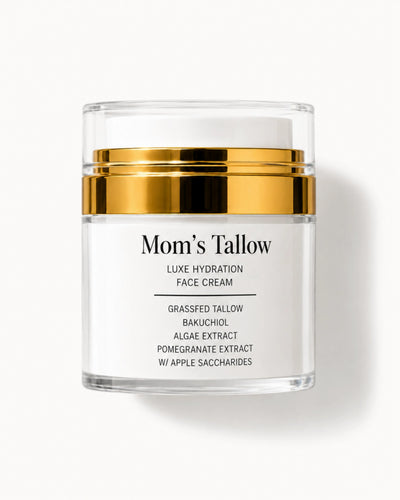
- For your face: Luxe Hydration Tallow Face Cream is our best seller and the easiest place to start.
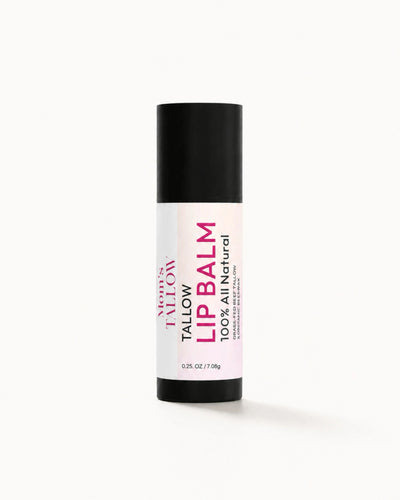
- For lips: our Tallow Lip Balm is made with just grass-fed tallow and beeswax, and doesn't turn liquid in your pocket the way coconut-based balms can.
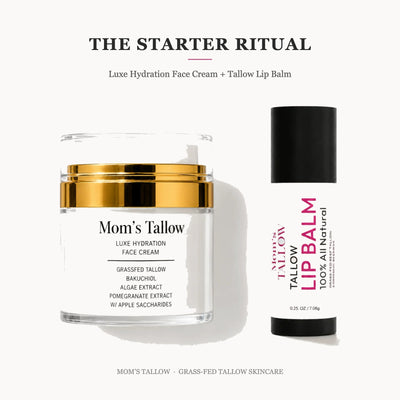
- To try both in one box: The Starter Ritual pairs a 1.7 oz Luxe with a lip balm.
Not sure which face cream fits your skin? Take our free 10-second Skin Scan. It looks at how your skin reads in the light, such as shine and evenness, and suggests a starting formula. It's a cosmetic guide, not a medical test. You can also compare our creams in Which Tallow Face Cream Is Right for You?
FAQ
Is tallow better than coconut oil for skin?
Neither is better for everyone. Coconut oil is a proven, inexpensive body moisturizer. Tallow tends to suit the face, very dry spots and cold weather better because it's less runny and stays on the skin longer. Many people use both.
Can I mix tallow and coconut oil?
Yes. Some homemade balms blend the two to make tallow softer. Keep in mind that adding coconut oil lowers the melting point, so the mix will turn soft or liquid sooner on warm days.
Why does coconut oil melt and tallow doesn't?
Coconut oil is about half lauric acid, a shorter fatty acid, so it melts at around 76°F. Tallow is rich in longer stearic and palmitic acids, which keep it solid at room temperature.
Is coconut oil good for your face?
Some people love it, but many find it too slick or heavy on the face. If you try it, patch test first and use a small amount. If your skin tends to feel oily, a light whipped tallow cream used sparingly may suit you better.
Does tallow smell like beef?
Well-rendered tallow should smell mild or like nothing. A strong beefy smell usually means the tallow wasn't rendered and filtered carefully.