The short answer: Yes, you can use tallow and retinol in the same routine. Put your retinol on clean, dry skin first, wait a few minutes, then press a thin layer of a plain tallow cream over it. If your skin feels dry or tight on retinol nights, try the "sandwich": a thin layer of moisturizer, then retinol, then more moisturizer. Tallow does not replace retinol, and a retinol routine still needs daily sunscreen. If your retinoid is a prescription, follow your prescriber's directions first.
Retinol is one of the most popular ingredients in skincare, and it has a reputation for leaving skin feeling dry, tight or flaky while you get used to it. Tallow has a reputation for feeling rich and comforting. So it's no surprise people ask whether the two can share a routine. They can, as long as you get the order, the amount and the timing right. This guide walks you through it, from a small tallow maker that would rather you use both well than give up on either.
Does tallow replace retinol?
No. Some social media posts call tallow a "natural retinol" because tallow contains small amounts of fat-soluble vitamins, including vitamin A. That isn't the same thing. Cleveland Clinic notes that tallow products most likely don't contain enough vitamin A to compare with retinol or other vitamin A derivatives, and that tallow's main proven role is as a moisturizer (Cleveland Clinic).
So think of them as two different jobs:
- Retinol is the active step. It's the reason you're doing the routine.
- Tallow is a rich moisturizer. It softens skin and helps it feel comfortable, which can make a retinol routine easier to stick with.
If you'd rather skip retinol entirely, that's a separate choice. Some people prefer bakuchiol, a plant oil often described as a gentler retinol alternative. Our bakuchiol guide covers that option.
How to layer tallow and retinol: step by step
This is the classic order for a night routine with a retinoid and a moisturizer. GoodRx's guide to moisturizing with Retin-A gives the same order: retinoid first, then moisturizer, or the sandwich method if your skin is dry or sensitive (GoodRx).
- Cleanse gently. Use a mild, non-scrubby cleanser and lukewarm water.
- Pat skin completely dry. Many people wait a few minutes before applying a retinoid. Follow your product's directions on this.
- Apply a pea-sized amount of retinol. That's enough for your whole face. Dot it on forehead, cheeks and chin, then spread it out. Keep it away from the corners of your nose, your lips and the skin right around your eyes.
- Wait a few minutes. Let the retinol settle so you don't smear it around.
- Warm a pea-sized amount of tallow cream between your fingertips until it softens.
- Press, don't rub. Press the cream over your face in thin layers. Press, rather than drag, so you don't move the retinol into the areas you kept it away from.
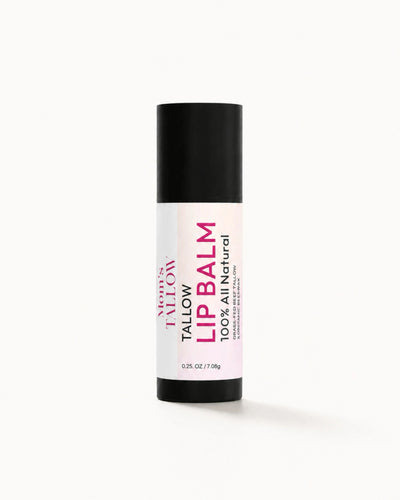
- Finish lips and eye area separately. A tallow lip balm on your lips and a rice-grain of a plain balm along the bone under each eye (outside the lash line) keeps those spots comfortable. See how to use tallow under your eyes.
The sandwich method (for dry or sensitive-feeling skin)
- Apply a very thin layer of tallow cream to clean, dry skin. Use about half your usual amount.
- Apply your pea-sized retinol on top.
- Finish with another thin layer of tallow cream.
The first layer puts a little cushion between retinol and skin, which many people find more comfortable while they're getting used to it. The trade-off is that a heavy first layer may make your retinol feel weaker, so keep that first layer thin.
How often to use retinol with tallow
Go slowly. A common approach is to start retinol one night a week, then two, then three, building up over several weeks before trying every other night or nightly (GoodRx). Tallow can go on every night, whether or not it's a retinol night.
| Week | Retinol nights | Other nights |
|---|---|---|
| 1-2 | 1 night a week, retinol then tallow (or the sandwich) | Tallow cream only |
| 3-4 | 2 nights a week, not back to back | Tallow cream only |
| 5-6 | 3 nights a week | Tallow cream only |
| After that | Every other night, if your skin feels fine | Tallow cream, or a richer balm on very dry nights |
If your skin feels tight, stingy or flaky, drop back to the last schedule that felt comfortable. More retinol nights isn't better if you end up skipping it for a week.
What kind of tallow cream to use on retinol nights
On nights you use retinol, simpler is better. Here's what to look for:
- Fragrance-free and no essential oils. GoodRx suggests skipping essential oils, alcohol and menthol alongside a retinoid. A fragrance-free cream keeps the routine calm.
- No other strong actives on the same night. Skip exfoliating acids and scrubs on retinol nights.
- A short ingredient list. If your skin reacts, it's easier to tell why.
- The right texture for your skin. Very dry skin often likes a rich balm; normal or combination skin may prefer something lighter. Our side-by-side face cream guide compares them.
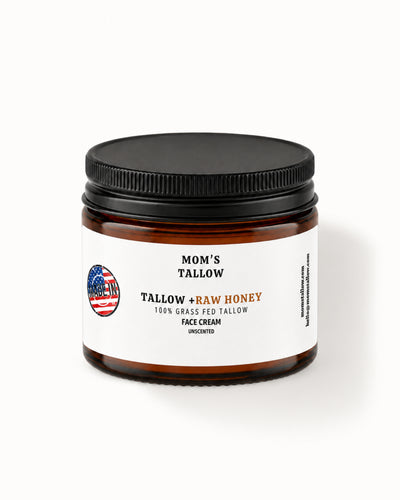
Our pick for retinol nights is Skin Serenity Tallow Face Balm. It has just four ingredients (grass-fed tallow, organic olive oil, raw honey and vitamin E), no fragrance and no essential oils, and it's rich enough to press over a retinoid. It's made in small batches in New Jersey.
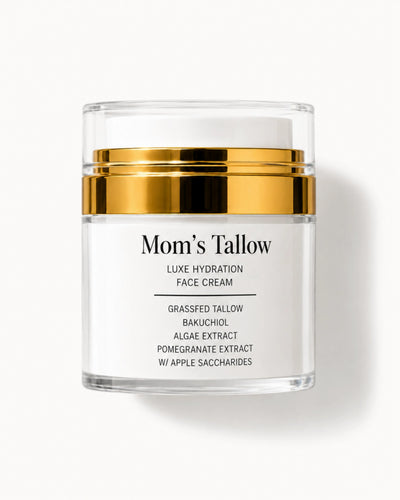
A note on our other creams: Cloud Whipped and Luxe Hydration contain bakuchiol. If you already use retinol, you don't need a second retinol-style ingredient on the same night. Many people use Luxe or Cloud Whipped in the morning (under sunscreen) and save retinol plus a plain balm for the evening.
Morning after retinol: don't skip sunscreen
Retinoids are a night-time step, and the morning after still calls for broad-spectrum sunscreen. Tallow is not sunscreen, and Cleveland Clinic points out it doesn't protect against the sun (Cleveland Clinic). A simple morning looks like this: gentle rinse, a thin layer of a light tallow cream, wait a minute, then sunscreen. If your face feels slippery, use less cream rather than less sunscreen. Our guide to wearing tallow under makeup has tips for keeping layers from pilling.
Who should go carefully
- Prescription retinoid users. Tretinoin and other prescription retinoids come with your prescriber's instructions. Ask them before adding or changing a moisturizer.
- Breakout-prone or very oily skin. Tallow is a heavy fat. Cleveland Clinic notes its thick texture may contribute to breakouts for some people. Try a small area first, or keep tallow to drier zones. See does tallow clog pores?
- Anyone pregnant, breastfeeding or trying to conceive. Talk with your doctor about whether retinoids are right for you.
- Anyone with a skin condition. If you're managing a diagnosed skin condition, check with your dermatologist before combining products.
As with any new product, patch test first: a small amount on your inner arm or jawline for a few days. Stop using anything that causes irritation.
Common mistakes
| Mistake | What happens | Fix |
|---|---|---|
| Using more than a pea of retinol | More dryness, not better results | A pea covers the whole face |
| Rubbing tallow in hard over retinol | Spreads retinol into the eye and nose creases | Warm the cream and press it on |
| A thick first layer in the sandwich | Retinol may feel weaker | Keep the first layer very thin |
| Retinol plus acids plus scrubs | Tight, uncomfortable skin | One active per night; tallow on rest nights |
| Skipping morning sunscreen | Undoes the point of the routine | Light tallow cream, then SPF every morning |
A simple week, start to finish
Morning (every day): rinse, thin layer of Luxe Hydration or your usual cream, sunscreen, tallow lip balm.
Retinol nights: cleanse, dry, pea of retinol, wait, press on Skin Serenity, lip balm.
Rest nights: cleanse, your favorite tallow cream. On very dry nights, some people like a thin overnight tallow layer.
Not sure which of our creams to start with? Take the free 10-second Skin Scan. It suggests a formula based on how your skin looks in the light. It's a cosmetic guide, not a medical test. And if a tallow cream becomes part of every night, Subscribe & Save takes 15% off every delivery (every 30, 60 or 90 days), and US orders over $75 ship free.
FAQ
Should I put tallow on before or after retinol?
After, in most cases: retinol on clean, dry skin, then tallow on top. If your skin feels dry or tight on retinol nights, try the sandwich: a thin layer of tallow, then retinol, then more tallow.
Is tallow a natural alternative to retinol?
No. Tallow contains small amounts of vitamin A, but not enough to act like retinol, according to Cleveland Clinic. It's a moisturizer. If you want a plant-based retinol-style ingredient, look at bakuchiol instead.
Can I use tallow with tretinoin?
Many people pair prescription retinoids with a rich moisturizer, but follow your prescriber's directions first and ask them before adding a new product.
Will tallow make my retinol less effective?
Putting a cream on after retinol is a standard routine. A thick layer under your retinol may dilute it a little, which is why the first layer in the sandwich method should be thin.
Can I use tallow every night, even when I'm not using retinol?
Yes. Tallow is a moisturizer, so it can go on every night. On rest nights, it's the only step after cleansing. Our guide to using tallow on your face every day covers amounts and timing.