The short answer: Bakuchiol is a plant-based ingredient that's often called a gentler alternative to retinol. One small, well-known 12-week trial found the two performed similarly on the look of wrinkles and dark spots, with retinol causing more peeling and stinging. But the research on bakuchiol is still thin compared with decades of retinol studies. If retinol works for you, there's no strong reason to switch. If retinol is too much for your skin, bakuchiol is a reasonable, gentler thing to try, as long as your expectations are realistic.
We make tallow face creams in small batches in New Jersey, and two of them contain bakuchiol. So we have an interest here, which is exactly why we want to give you the honest version: what's known, what isn't, and how to decide.
What is bakuchiol?
Bakuchiol is a compound from the seeds of the Psoralea corylifolia plant (GoodRx). Despite the comparisons, it is not a form of vitamin A and doesn't belong to the retinoid family. It shows up in serums, oils and moisturizers marketed for the look of fine lines, uneven tone and texture.
Retinol, by contrast, is a form of vitamin A. It's one of the most studied ingredients in cosmetic skincare, and it's also known for a getting-used-to-it phase of dryness, flaking and stinging for many people.
Bakuchiol vs retinol at a glance
| Bakuchiol | Retinol | |
|---|---|---|
| What it is | Plant compound from Psoralea corylifolia seeds | A form of vitamin A (a retinoid) |
| Amount of research | A handful of studies, mostly small | Decades of studies |
| Typical use | Often once or twice a day | Usually at night, built up slowly |
| Common complaints | Some redness reported in small studies; allergy possible | Dryness, peeling, stinging while skin adjusts |
| Sun sensitivity | None reported in the main trial | Daily sunscreen strongly advised |
| Pregnancy | No research; ask your doctor | Generally avoided; ask your doctor |
What the research actually found
The study everyone cites was published in the British Journal of Dermatology in 2019. Forty-four people used either a 0.5% bakuchiol cream twice a day or a 0.5% retinol cream once a day for 12 weeks. Both groups saw a significant decrease in wrinkle surface area and hyperpigmentation, with no statistically significant difference between them. The retinol group reported more facial scaling and stinging (PubMed).
That's encouraging, but there are real limits worth knowing:
- It was small: 44 people for 12 weeks.
- The doses weren't equal: bakuchiol was used twice as often as retinol. Cosmetic chemist Michelle Wong (Lab Muffin) points out that this doesn't show bakuchiol is as effective as retinol (Lab Muffin).
- Bakuchiol reportedly caused more redness in that trial, even though retinol caused more peeling and stinging (Lab Muffin's summary of the study).
- Overall evidence is limited. Lab Muffin calls the evidence weak compared with standard skincare ingredients and advises against replacing a retinoid that's working with bakuchiol.
So the fair takeaway: bakuchiol is promising and seems easier on many people's skin, but it hasn't earned "just as good as retinol" status.
Who might choose which
Bakuchiol may suit you if:
- You've tried retinol and couldn't get past the dryness or stinging.
- You want one simple step you can use morning or night.
- You prefer plant-based ingredients and are fine with gradual, modest changes.
Stick with retinol if:
- You already use it comfortably and like your results.
- You want the ingredient with the most research behind it.
- Your dermatologist recommended a retinoid. Follow their plan.
Talk to a doctor first if:
- You're pregnant, breastfeeding or trying to conceive. GoodRx notes there's no research on bakuchiol's safety in pregnancy or breastfeeding, and retinoids are generally avoided then.
- You're managing a diagnosed skin condition or using prescription skincare.
Can you use bakuchiol and retinol together?
Some people do. A common approach is bakuchiol in the morning and retinol at night, and GoodRx suggests checking with a dermatologist before combining them. If you're new to both, don't start them the same week. Add one, give it a few weeks, then consider the other. Our guide to using tallow with retinol explains the retinol-night order and the "sandwich" method.
How to use bakuchiol
- Patch test first. Bakuchiol is a plant extract, and plant ingredients can cause allergic reactions. Try a little on your jawline or inner arm for a few days.
- Follow your product's directions. Many are used once or twice a day.
- Apply to clean skin, then a moisturizer if the product isn't one already.
- Wear sunscreen every morning. Bakuchiol didn't cause sun sensitivity in the main trial, but daily sunscreen is still the most important step in any routine aimed at the look of aging.
- Be patient. GoodRx says results may take about 3 months. The trial ran 12 weeks.
Where do creams go in the order? See our tallow skincare routine for the morning and night step order.
Our bakuchiol creams, honestly
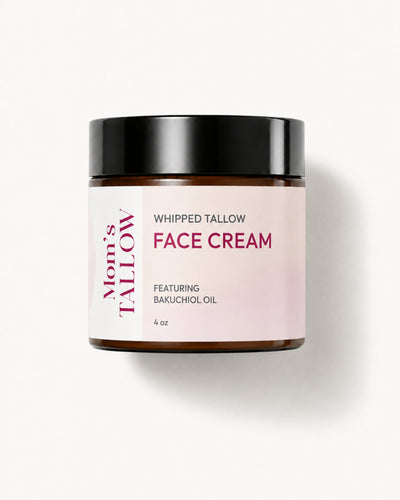
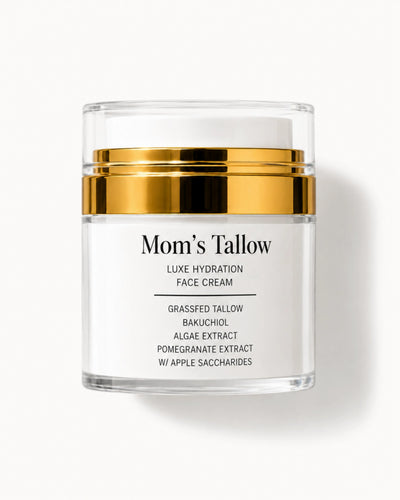
Two of our face creams include bakuchiol oil in a grass-fed tallow base: Luxe Hydration (our bestseller, with shea butter and botanicals) and Cloud Whipped (whipped and airy, our richest cream). We make them as rich daily moisturizers. We haven't run a clinical trial on them, and we don't claim they'll change wrinkles or dark spots. What we can say: they're made in small batches in New Jersey, with short ingredient lists you can read.
If you use a retinol at night, you don't need a second retinol-style ingredient on the same night. Many people use Luxe or Cloud Whipped in the morning under sunscreen and press a plain balm such as Skin Serenity (four ingredients, no fragrance) over retinol in the evening.
Not sure which texture suits you? Take the free 10-second Skin Scan. It suggests a formula based on how your skin looks in the light; it's a cosmetic guide, not a medical test. Our side-by-side face cream guide compares all of them. And if one becomes your daily cream, Subscribe & Save takes 15% off every delivery, with free US shipping over $75.
FAQ
Is bakuchiol as good as retinol?
One small 12-week trial found similar results on the look of wrinkles and dark spots, but bakuchiol was used twice as often, and overall research is limited. Retinol still has far more evidence behind it.
Is bakuchiol a retinoid?
No. It's a plant compound that's often compared to retinol, but it isn't a form of vitamin A.
Does bakuchiol make you sensitive to the sun?
Sun sensitivity wasn't reported with bakuchiol in the main trial, unlike retinol. Wear sunscreen every morning anyway.
Can I use bakuchiol while pregnant?
There's no research on bakuchiol in pregnancy or breastfeeding. Ask your doctor or dermatologist before using it.
How long does bakuchiol take to work?
Expect gradual, modest changes over months, not weeks. The main study ran 12 weeks, and GoodRx suggests giving it about 3 months.
Made in small batches in New Jersey. Free US shipping on orders over $75.