Short answer: To render beef tallow at home, trim and finely chop beef suet (or brisket trim), melt it slowly over low heat with a little water, strain out the solids, then cook off the remaining water and pour the clear fat into clean jars. Expect a full afternoon or overnight, a strong beefy smell in the kitchen while it cooks, and less tallow than the raw fat you started with. If you only need a jar or two for searing, roasting and holiday baking, buying ready-rendered tallow usually costs you less time for the same result.
Rendering is one of those kitchen jobs that sounds intimidating and turns out to be mostly waiting. Below is a plain, step-by-step method, the choices that actually change your results (which fat, wet or dry, how hot), and an honest look at when it makes sense to make your own and when to just buy a jar.
What 'rendering' tallow means
Tallow is beef fat that has been melted down and separated from the bits of meat, membrane and connective tissue that come with raw fat. Raw suet is white and crumbly; rendered tallow is a clean, solid fat at room temperature that melts into a clear golden liquid when warmed. Rendering is simply the slow melt plus the cleanup. If you want the background on where tallow comes from and how grass-fed differs from conventional, see What Is Grass-Fed Tallow?
Step 1: Choose your fat (suet vs. trim)
You can render tallow from two kinds of beef fat, and they give slightly different results.
- Suet is the hard fat from around the kidneys. Home cooks generally consider it the best choice for tallow; Little House Living calls kidney fat 'the best' and Practical Self Reliance renders from suet as well. It tends to give a firmer, milder tallow.
- Trim is the soft fat cut off steaks and brisket. It is often free if you already trim your own meat, and BarbecueFAQ walks through rendering brisket trim specifically. It can carry a little more beefy flavor, which many people like for cooking.
Ask a local butcher for suet, especially from grass-fed cattle if that matters to you. It is usually inexpensive because few people ask for it, but supply varies, so call ahead.
Step 2: Trim and chop
Cut away any visible meat, blood spots and glands. These are what scorch and give tallow an 'off' smell later. Practical Self Reliance reports losing about 20% of the starting weight just in trimming, so do not be surprised if your pile shrinks.
Then cut the fat small. Pieces under half an inch melt far faster and more evenly; a food processor or a meat grinder makes quick work of it. BarbecueFAQ notes that grinding exposes more of the fat and can increase how much tallow you get. Working with partly frozen fat makes chopping much easier.
Step 3: Wet or dry rendering?
This is the choice that matters most for flavor.
| Wet rendering | Dry rendering | |
|---|---|---|
| How it works | Fat melts with a little water in the pot | Fat melts on its own |
| Risk of scorching | Lower; water keeps early temperatures down | Higher, especially at the start |
| Typical result | Milder, cleaner-tasting tallow | More 'roasted' flavor; can taste burnt if rushed |
| Extra step | You must cook off all the water at the end | None |
Both Practical Self Reliance and BarbecueFAQ recommend wet rendering. Practical Self Reliance says dry rendering 'usually results in burned tallow with a scorched taste,' and BarbecueFAQ says it gives less yield and more impurities. Amounts of water vary widely by method: Practical Self Reliance uses about 1/2 cup of water per pound of suet, while BarbecueFAQ's boil-and-chill method uses about 2 cups per pound of trim.
Step 4: Melt it low and slow
Put the chopped fat and water in a heavy pot, a slow cooker or a Dutch oven. Keep the heat low. Little House Living notes beef fat begins to render at roughly 130–140°F, so there is no need to blast it.
- Stovetop or oven: Cover the pot until most of the fat has melted, then uncover so the water can start to cook off. Stir now and then.
- Slow cooker: Little House Living runs hers for at least 8 hours, stirring about once an hour and turning the heat down once it bubbles.
Plan on several hours. Practical Self Reliance reports about 4 to 5 hours for finely chopped suet at 225–250°F, and much longer (up to about a day) for coarse pieces at lower heat. The fat is done when the solid bits (cracklings) are shrunken and golden and have sunk or stopped releasing fat.
About the smell: rendering does smell strongly of beef while it cooks. Open a window, or do what some homesteaders do and run the slow cooker in a garage or on a porch.
Step 5: Strain, then finish
Ladle or pour the hot fat through a fine-mesh strainer lined with a double layer of cheesecloth into a clean pot or heatproof bowl. Little House Living found cheesecloth messy and used a fine-mesh strainer alone; a coffee filter gives the clearest result but drains slowly.
If you wet-rendered, you now need to get every drop of water out, because leftover water is what makes tallow spoil. Two common ways:
- Cook it off: Return the strained fat to the pan and heat gently (Practical Self Reliance uses 225–250°F) until it stops bubbling. Bubbling means water is still escaping.
- Chill and lift: BarbecueFAQ's method is to chill the pot until the tallow sets into a solid disc on top of the water, lift it off, scrape the underside clean, then re-melt it just enough to pour. Their caution: do not overheat it to deep-frying temperatures at this stage.
Pour into clean, dry glass jars and let them cool uncovered before lidding.
How much tallow will you get?
Less than you start with. Some weight goes to trimming, some stays behind in the cracklings, and wet rendering loses the water. Yield depends on how fatty your suet or trim is and how finely you chop it. Practical Self Reliance's recipe estimates 2 to 3 pounds of tallow from 4 pounds of suet; treat that as a rough guide rather than a promise.
How to store homemade tallow
Sources disagree on shelf life, so play it safe. Practical Self Reliance suggests roughly a year at room temperature, up to 18 months in the fridge and up to 2 years in the freezer; BarbecueFAQ keeps theirs in the fridge only. Our advice: keep a working jar in the fridge and freeze the rest. Use clean utensils every time so you do not introduce water or food bits. If it smells sour, soapy or crayon-like, throw it out. For signs that tallow has gone off, see How Long Does Tallow Balm Last? (the same rules apply to kitchen tallow).
Make it or buy it? An honest comparison
| Rendering at home | Buying ready-rendered | |
|---|---|---|
| Time | An afternoon to a full day, plus cleanup | None |
| Cost | Low if your butcher gives suet cheaply or you have trim | Higher per jar |
| Kitchen smell | Strong beef smell for hours | None |
| Consistency | Varies batch to batch | Same texture and flavor each jar |
| Flavors | Plain unless you infuse it yourself | Options like garlic or truffle |
Render at home if you buy beef in bulk, already have a freezer full of trim, enjoy the process, or want to make large amounts for soap or candles.
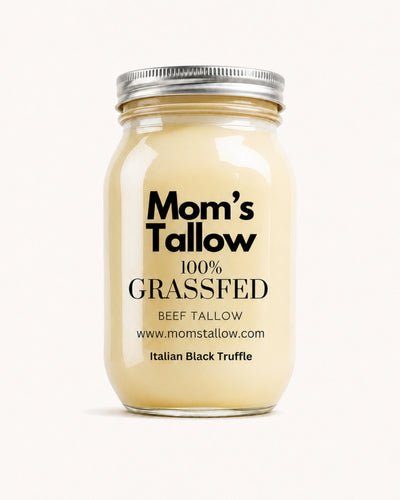
Buy if you want tallow for a few specific uses, like holiday roast potatoes, searing steaks or pie crust, and would rather not spend a day straining fat. Our Grass-Fed Beef Tallow is rendered in small batches in New Jersey from the fat of grass-fed cattle and comes plain or in roasted garlic and Italian black truffle. If you cook with it a lot, the Flavored Super Saver Combo gets you all three. Once you have a jar, our guide on how to cook with beef tallow covers what to make first.
A note on tallow for skincare
Kitchen tallow and skincare tallow start from the same fat, but skincare tallow is typically purified further so it has little to no beef smell, and it is often whipped or blended with oils for a smoother feel. If you are rendering mainly to make a face or body balm, know that getting a truly neutral scent and smooth texture takes extra purifying steps and some trial and error. If you would rather skip that, our Luxe Hydration Tallow Face Cream is made for everyday use, and the free Skin Scan can point you to the texture that suits your skin in about 10 seconds.
FAQ
Can I render tallow in a slow cooker?
Yes. A slow cooker is one of the easiest ways because it holds a low, steady heat. Add the chopped fat with a little water, cook on low or high for 8 hours or more, stirring occasionally, then strain.
Why does my homemade tallow smell beefy?
Usually because of leftover meat or blood on the fat, heat that was too high, or a dry render. Trim carefully, use wet rendering and keep the heat low. A second wet render (melt with fresh water, chill, lift the disc) can make it milder.
Is suet the same as tallow?
No. Suet is the raw, hard fat from around the kidneys. Tallow is what you get after you render suet (or other beef fat) and strain it.
How do I know all the water is gone?
When you heat the strained fat and it no longer bubbles or crackles, the water has cooked off. If you used the chill-and-lift method, scrape the underside of the solid disc well before re-melting.
What can I cook with tallow?
Searing steaks, roasting potatoes and vegetables, frying, and baking pie crusts and biscuits are all classic uses. It also makes a good swap for butter or oil in many savory recipes.